Embracing Change: The Human Element in Architecture

The Living Building

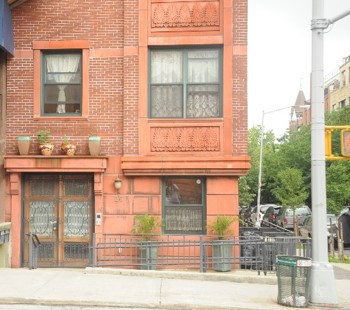
When I visit or pass by buildings that I have worked on and that I know intimately, I am always surprised that it never looks the same when it is lived in, worked in and used. 

I have spent many hours in the creative process, contemplating and working on from inside to out and outside back in, evolving a very clean thought-out specific vision. This building has taken on another personality that is not the one I gave it. It no longer feels familiar to me. It has evolved, grown clumsy, succumbing to weariness and dinginess and I sometimes seriously question whether it is the same design.

The truth is, the Design has changed, because it is changed by the dialog between its interior and exterior use and its existence in its environment. This is the living building.  The living building is different from the design concept or the newborn building.  And maybe that is an analogy for human life. Our beauty lies in how we grow and are embraced for who and what we are and how we reflect our purpose.  The same is true for the building. When put to daily use it evolves and matures and is loved for what it is, what it means to the people it serves, and how it allows those people to live and work within it.

It is an amoeba, growing and changing with use and change of purpose, or perhaps in finding its purpose. We as humankind are the same, constantly changing and evolving and finding new purposes and faces, changing physically, emotionally and spiritually. That is the living human. Like the building, it is natural for us to evolve from our original form, our best look, our perfect mindset and become messier, a little more chaotic but just as charming.

Thus begins the Chronicles of the Inner Room, looking at how space works and our built environment evolves and impacts us and how it does and does not work for us.

How does our environment make us feel safe? How does it contribute to our well-being, our creativity, sense of community and belonging? Or why does it not contribute to all those things. This is an exploration that maybe leads to concrete ideas and may just be enough of a psychological lift to make us feel as if we are wrapped in a warm blanket.

Then again, it may all be BS. IDK.

The Ikumba

The Ikumba: Interior of Dwelling / Inner Sanctum

The word “ikumba” was introduced to me in 2003 by Alex Smith of Lexgraphics Graphic Design. I told Alex that I wanted a logo that represented a company (that I did not yet have a name for) that would be centered on the individual user, producing culturally relevant designs for buildings and spaces and engendering a sense of ownership of space and by extension physical and emotional comfort. Alex quickly responded by showing me this beautiful book of photographs of artwork by women from the Ndebele tribe of Southern Africa: Ndebele : The Art of an African Tribe by Margaret Courtney Clarke.

The book displayed the artistry that was so much a part of their everyday lives: the body decoration and the paintings these women did on the exterior of their mud brick homes. Their strength and creativity is phenomenal and is evidenced in their ability to hold on to their culture and a sense of self despite the ravages of apartheid, disrupted family lives and poverty. And when we consider the individual awareness of space and place, the most mind shattering concept for me, was the ikumba. The ikumba was the interior of the home and considered fully the woman’s domain, her space of refuge. So strong was the association with her that no one could enter without establishing trust and being invited in; and for the symbolism of the ultimate in ownership: when she leaves the home or dies, her ikumba was allowed to disintegrate, no one else would inhabit it.

Don’t imagine that the ikumba is a quiet reserved space, rather the woman is queen of her domain, the space is the center of family life, used for preparing food and gathering. The ikumba is multifunctional, changing function by the rearrangement of furniture or placement of mats on the floor.

I have translated the word ikumba to mean interior of dwelling, interior of self or inner sanctum. Every year, this concept becomes more nuanced. There are so many subtleties of the ikumba that speak to me as an architect and my concerns for the impact of buildings:

— Multipurpose / multifunctional space.

— Sustainable design using local materials to build the house, with scarce resources using every opportunity to contribute to energy conservation, recycling of use and reduction of waste.

— Organic – Both in design form and materials used.

— Focused on promoting individuality of expression.

Paula Griffith, RA